
by the Rev. Kara Barrett and the Rev. R.J. March of All Souls Seattle
Four years ago, All Souls showed up at Westside Neighbors Shelter with three pots of chili.
Nothing particularly revolutionary about that. Just some food, a few willing hands, and a desire to be good neighbors.
We kept coming back. For three winters, we showed up with food. And then something rather wonderful happened: We were invited to sit down.
Not just to serve dinner, but to share it. To move from standing behind the table to finding our place around it.
Looking back, that invitation has changed us more than we could have imagined.
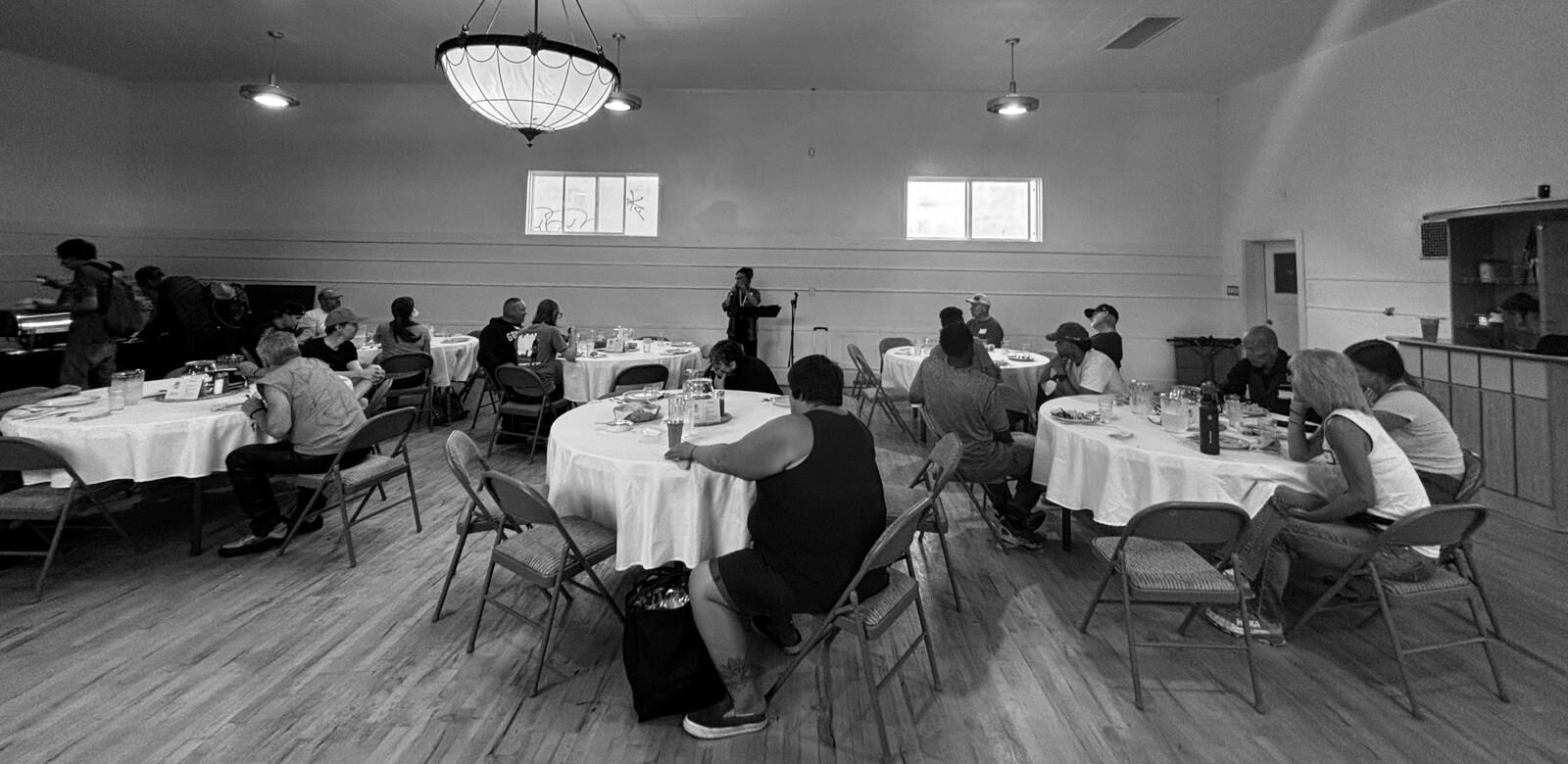
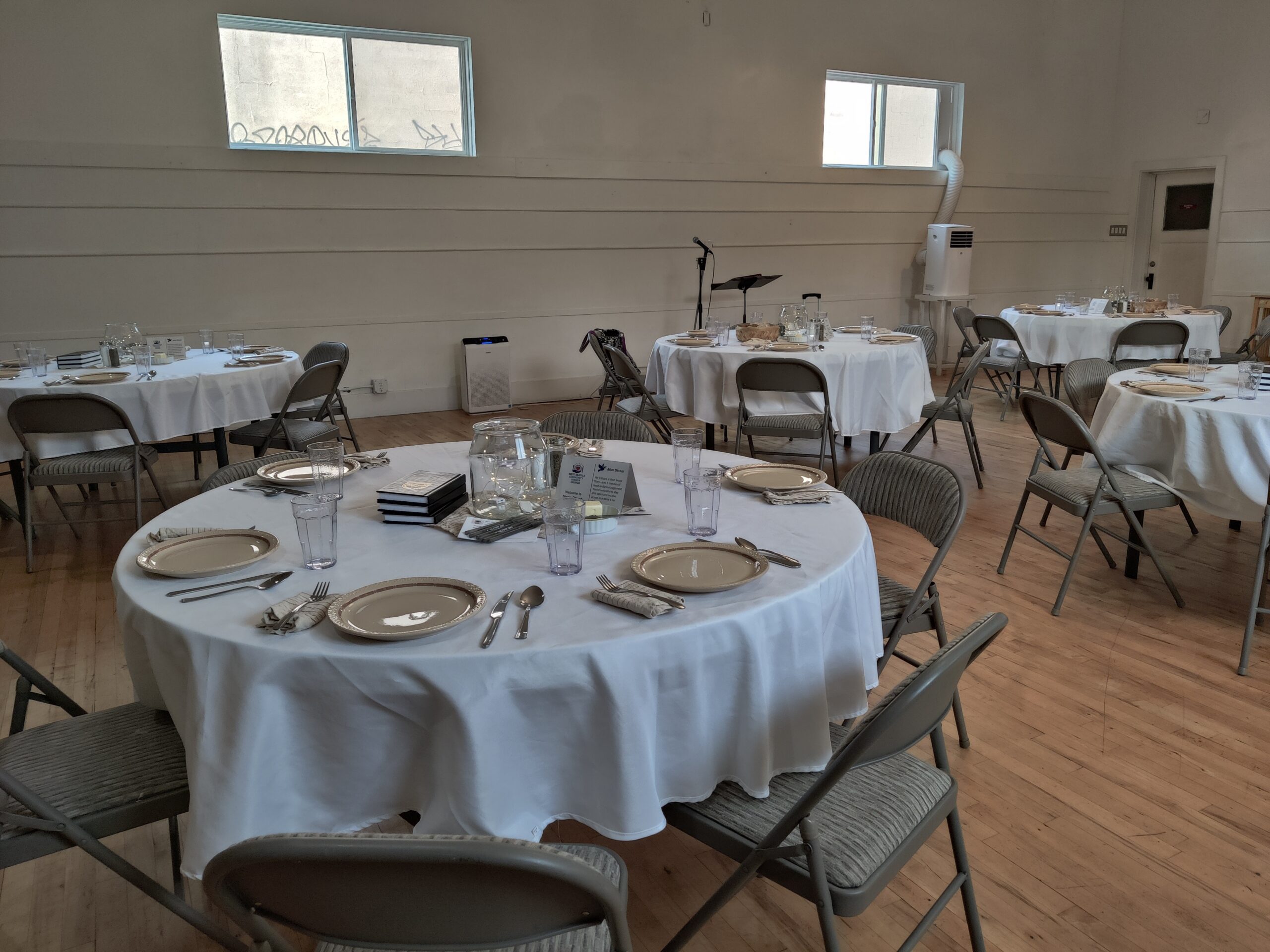
This past August, “Dinner Church” celebrated its first full year of gathering every Friday night at the American Legion in West Seattle. Together with Pastor Sally Lee of the Free Methodist Church and volunteers from congregations across the neighborhood, we’ve been learning what it means to make a feast together.
And a feast is different from a meal program. At a feast, everyone is a guest. Everyone has something to bring. Hospitality is mutual. Nobody is a project.
There is food, friendship, prayer, the good news of Jesus, and plenty of the ordinary unpredictability that comes with sharing life together.
Walk into the American Legion on a Friday night and the first thing you’ll notice is the smell of a homemade meal. Then you’ll hear it: music, chatter, laughter, and sometimes tears.
Around the tables are neighbors from a nearby encampment, neighbors from local shelters, and neighbors from churches across West Seattle. Housed and unhoused, sitting down together. Most Fridays, around 30 unhoused neighbors join us at the table.
The evening has a simple shape. We begin with a blessing over the meal. Then, as we eat, there’s a Scripture reading and a short proclamation. The good news is proclaimed through the reading of God’s Word, and it’s embodied as neighbors feast together.
From serving neighbors to joining with neighbors
At All Souls, our vision is to see the garden-city of God growing in the soil of Seattle. We talk about putting down deep roots in relationship with God and growing wide branches that welcome the wandering, reach for the hurting, and join with neighbors.
That last phrase, join with neighbors, has become increasingly important to us.
We’ve noticed how easily the language of service can divide us into two groups: the people who have something to give and the people who need something. And that’s not quite the picture of the kingdom we see in Jesus. Jesus served. But he also received: a drink of water from a Samaritan woman, a meal at Zacchaeus’s house, perfume poured over his feet.
The good news of the Incarnation is that God didn’t love the world from a safe distance. God came to be with us. And by the power of the Spirit, Jesus invites us to take up that little preposition: with.
Seattle is a breathtakingly beautiful city. Mountains, water, trees, coffee. We have an embarrassment of riches. And yet, alongside all that beauty, we have a profound housing crisis and one of the largest populations of unhoused neighbors in the country.
We can’t claim to love this place while looking away from the people who live here.
But we also don’t want to imagine that we’re arriving with all the answers. We’ve increasingly come to understand homelessness not only as a crisis of housing, but also as a crisis of connection and belonging. Housing matters enormously. So does connection. And connection runs both ways.
Dinner Church is one place where we’re learning to offer presence and to be received as friends. Those friendships are changing us, and they’re showing us how much we still have to learn.
Learning how to be with one another
Neighboring is an art, and like any art, it takes practice. Over the last few years, we’ve offered Mental Health First Aid and Companionship Training, helping our community develop the skills to listen, accompany, and be present with people navigating difficult circumstances.
This fall, we’re taking another step with a five-week course in Motivational Interviewing led by Ken Kraybill. That might sound like an unusual thing for a church to be doing. But here’s why:
We had been walking alongside a neighbor who regularly talked about wanting to enter recovery. And we did what many well-meaning people do. We found phone numbers. We gathered information. We explained the next steps. We tried to make the path easier.
Ken helped us see what was happening. Even though Jesus invites us to take up the preposition with, we often feel more comfortable doing things for people. It’s easier to slip into project management mode, trying to fix a situation, than to journey with a person.
What our neighbor needed wasn’t necessarily another phone number. He needed someone willing to listen, to ask good questions, and to help him explore his own hopes, fears, and motivations. That’s a pretty significant shift.
And it turns out these are skills we need everywhere. With our children. Our spouses. Our friends. In pastoral care. In ordinary conversations with people we love.
What began as a desire to accompany unhoused neighbors is teaching us how to be better neighbors to one another.
And then there was bingo
One of the delightful surprises in all of this has been the growing importance of play.
Yes, play.
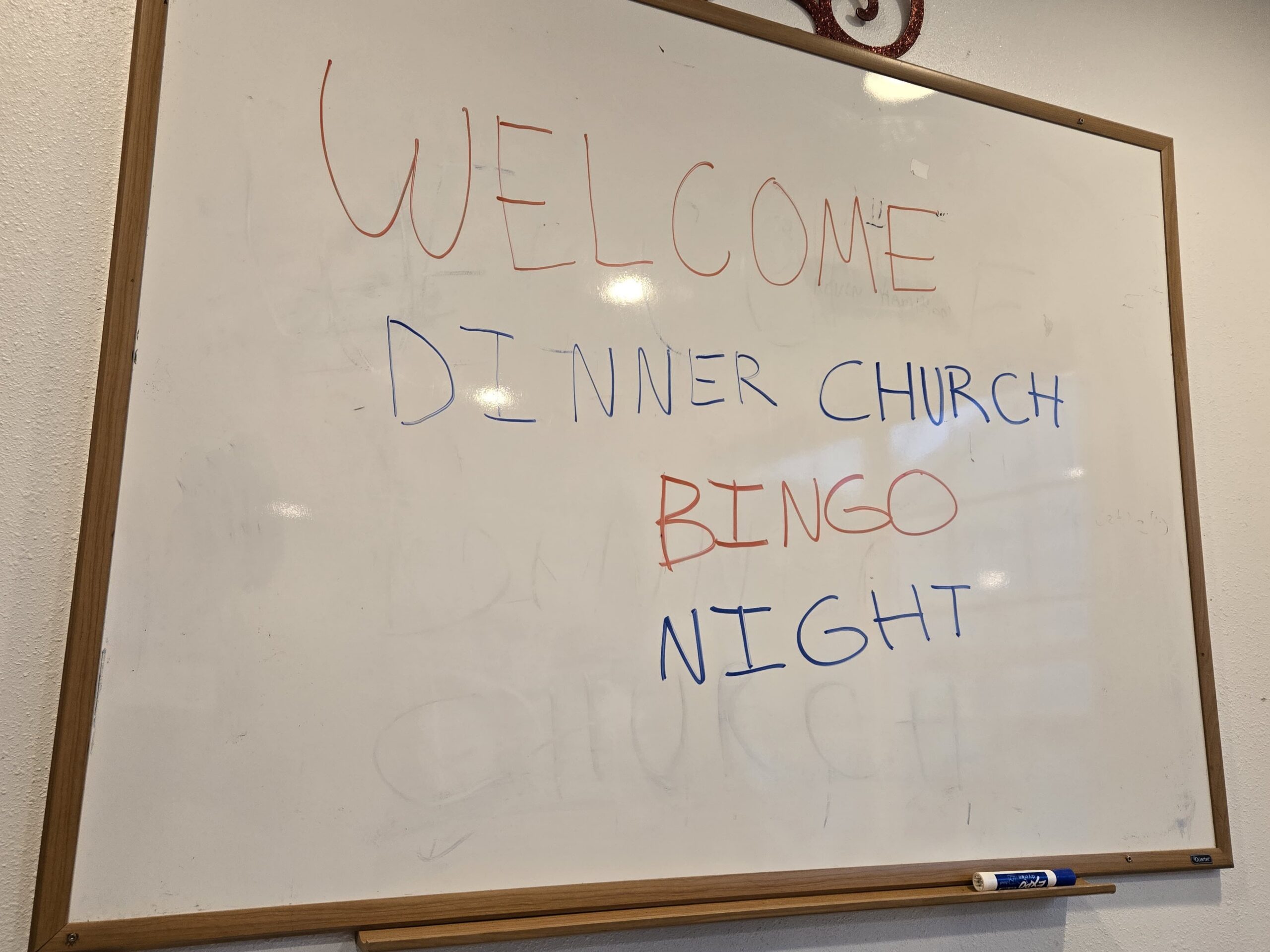
We had a bingo night at Dinner Church. We laughed. We competed. We exchanged cheers and boos. We enjoyed being together. And it got us wondering whether something as simple as having fun together might actually be part of God’s healing work.
Two therapists in our All Souls community began helping us explore what a trauma-informed approach to play and connection might look like.
Meanwhile, our high schoolers were learning the same lesson. Each year, our high school students travel to the Warm Springs reservation in Central Oregon to run Kids Club with Sacred Road Ministries. Mostly, that means playing: a pickup soccer game, bubbles drifting across the field, tables covered in art and crafts. One of our volunteers summed it up perfectly: Kids Club is Dinner Church for kids.
Watching the shared joy between our high schoolers and the kids at Warm Springs changed the way we think about play. Play isn’t a break from the work of the kingdom. It can be a glimpse of it.
This evokes the vision in Zechariah 8, where the prophet imagines the restoration of Jerusalem as a city whose streets are filled with boys and girls playing.
Play may seem ordinary, but the ability to play is an expression of hope.
Children playing in the streets. Children who are safe enough to play. A city where people can flourish.
And that got us dreaming.
In September, we launched a Kids Club at Henderson Village, a tiny house shelter community for families. Our initial idea was to have our high school students lead activities for children.
But the team at Henderson Village had a better idea.
What if, instead of creating a program where parents drop off their kids, we created space for parents and children to play together? It was the very thing our therapist friends had been nudging us toward for months.
So every other Wednesday afternoon, our high schoolers arrive with art supplies, games, and snacks, and parents and children are invited to delight in one another through play.
Sometimes that looks like a mom and her daughter leaning over a game of Connect 4. Sometimes it’s quieter: a parent and child each choosing a coloring page and working side by side. And sometimes it’s everyone at once, squealing as kids chase bubbles, or laughing as they race under a giant parachute, trying to reach the other side before the fabric falls.
This week, one boy saw our high schoolers setting up and took off running, shrieking, “A party! We’re having a party!”
He might be onto something. We may rename our Wednesday gathering Community Party. At Dinner Church, the good news is embodied around a shared meal. At Community Party, it’s embodied through shared play.
The prophet Malachi speaks of the hearts of parents turning toward their children and the hearts of children toward their parents. Under the immense stress of housing instability, those connections can be difficult to sustain. But play connects, and delight protects. When a parent and child share a moment of joy, when each sees that the other is glad to be with them, it builds the kind of bond that helps carry a family through hard things.
So now we’re learning to take joy seriously. Not as a distraction from the hard realities our neighbors face, but as a pathway to healing and hope.
We’re gardeners, not empire-builders
Father Greg Boyle of Homeboy Industries has said that we go to the margins not to make a difference, but so the people there will make us different.
That’s a pretty good description of what’s happening to us.
We began with chili. We were invited to a table. We discovered friendships. We started learning new ways of listening. And now those friendships are growing into new opportunities for connection, play, and joy.
None of this was part of some grand strategic plan.
At All Souls, we’re trying to learn what it means to be gardeners rather than empire-builders. To pay attention to the soil of our city. To notice what God is already cultivating. To nurture what is growing, rather than insisting that everything fit the plans we arrived with.
And we’re not doing this alone.
Dinner Church has been a partnership among churches from the beginning. Every month, pastors and community leaders across West Seattle gather to pray, listen, share what we’re noticing, and ask what we might do together that none of us could do alone.
There’s something deeply hopeful about that. Different churches, different traditions, different gifts, all joining in the work of loving the same neighborhood.
At All Souls, we sometimes talk about extending the table leaves of the Communion table into our neighborhoods in Home Groups and Dinner Church has become another way we’re learning what that might mean.
The table keeps getting bigger. The friendships keep surprising us. We came with chili, expecting to serve. Instead, someone pulled out a chair for us. And we found Jesus already at the table, welcoming us.
Learn more about All Souls Seattle.

Gifted for teaching and connecting people, the Rev. Kara Nichols Barrett has worn many hats over the years on staff, leading spiritual formation for all ages and inviting us into deeper knowing and witnessing of God’s love. Her most recent graduate degree is from Fuller Seminary. She and her family live in the Junction.
A Chicago native, a musician, a soccer player, and a gifted community builder, the Rev. R.J. March has also served with churches in London and St. Louis. He and his family live in Highland Park.