

When it comes to church planting, cities and urban areas have gotten a lot of the attention, training, and resources in recent years. The thought is that rural areas will “do okay” without intentional church planting efforts, because they’re already adequately churched and isn’t everything fine out there anyway?
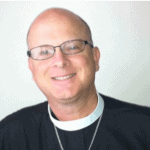 But we’re discovering that rural America is becoming the new “inner city.” The needs are massive, and growing at a scary rate. Last year, at the request of Bishop Todd Hunter, the Very Rev. Victor Schreffler (Dean of the Sacramento Valley) formed a Rural Church Planting Initiative for the Diocese, and is now the Dean for Rural Church Planting. We recently spoke with him about his work.
Q: What is the Rural Church Planting Initiative?
VS: Our mission is to develop resources and networking for rural church planting. Most of this first year has been building the network and getting to know people who are working in rural areas, seeing what they’re doing, and surveying the landscape.
Our goal for this coming year is to develop some models we can field test; moving from the library to the laboratory.
Q: Why rural churches? Why is this a passion of yours?
VS: Jesus spent a lot of time ministering in rural areas. 85% of the geography of this country is rural, and there are 50 million people in the US living in rural areas. The last presidential election put everyone’s attention on the plight of rural people and the problems of rural areas, which have only gotten worse over the last couple decades.
I’m personally interested in this because several of the churches that I’ve pastored have been in rural and semi-rural areas. During this time, I was immersed into rural culture. And there is a lot to admire about their culture. The people are very incarnational and their relationships are genuine and important. They are extremely hardworking and resourceful people.
I have a heart for rural America because I believe the church can help fill a void where many services are lacking for these people.
Q: Why is it important to emphasize rural church planting?
VS: Forty years ago if people said they wanted to go serve in Africa, others would slapping them on the back and telling them how great it was. They’d be offered generous prayer and financial support.
Today, if someone graduates from seminary and says they want to serve in rural America, they are pulled aside and told not to throw their life away. And if they try to raise money, they hear from others, “Why do you need money? Everything is fine out there!”
There are many assumptions about rural churches that are simply incorrect. Reality in rural areas is very different from the idyllic images a lot of us have. Typically when people think of rural areas they see a picture of people sitting on their front porch, never needing to lock their doors, always getting along, taking care of each other, and churches that are packed full every Sunday.
It is a beautiful myth, but that’s all it really ever was. The percentage of people attending church is actually slightly lower in rural than urban areas. These areas have now become a kind of an undiscovered country with poverty, addiction, loneliness and heartache.
Q: What are some of the unique challenges in rural areas?
VS: The opioid crisis has hit rural areas really, really hard. It’s tragic because the drug companies have said these drugs are not addictive and will take care of their pain. And we now have a nation of addicts.
It becomes more acute in the rural areas because with many hospitals closing they don’t have access to medical resources and mental health professionals. (95% of psychiatrists and psychologists are in urban areas.) So dealing with these issues is really difficult.
Many rural churches are either harshly fundamentalist and legalistic or they are “ultra-charismatic.” They are told if you have an addiction problem, just go to the altar, we’ll pray and it will go away. And if it doesn’t go away then you must not have the faith to deal with it. Instead of getting hope, the church is a place where they get shame.
In addition, many schools are having a harder time finding teachers. There is a resignation to all of these challenges. There is a sense that they are really not valued as much as the rest of the country.
A lot of denominations are waking up to these problems and the need for healthy, biblical churches in rural areas.
Q: What are the unique opportunities in rural areas?
VS: Since rural people have typically lived there for years they can be cautious of “outsiders.” It sometimes takes longer to build trust. We can’t go in expecting to be the “great white hope,” we have to be in it for the long haul. They need to know that you’re really here to help them and not just here to build something.
Because of this, one opportunity for beginning to work in rural areas is helping in the schools. There are opportunities to partner with schools in after-school care for children, homework help and mentoring.
Another opportunity is to work with the elderly. There is real respect for the elderly in rural America. Being present in senior care centers can be a way to build trust and serve needs.
Being among the farmers is another opportunity. Farmers today are committing suicide at twice the rate of veterans. They are working 80 hours per week, costs are going up and despair is settling in. Being in their lives to listen, counsel and support them is another crucial opportunity that we have.
Q: What can people to do to get involved?
VS: This year we are focusing on building the network and raising funds. Here are 3 ways you can get involved:
- Let us know if you’re working in a rural area. We’d love to hear what’s happening and what your needs are. Or if you know of someone working an a rural area, let them know about us. Contact us or share a prayer request on the site.
- Join the prayer support team. We are building prayer support network for rural pastors/churches that can respond to their prayer requests. We want to mobilize a “Gideon’s army” of 300 people to join our prayer support team.
- Invest financially. We recently were offered a $5000 “challenge” grant, which means each dollar you donate will be matched up to $5000. You can donate here.
I also believe that larger suburban churches can be challenged to invest in rural areas, just like we were sending missionaries to China and Africa 50 years ago. It’s an investment that will pay off. There could be an explosion of healthy churches in these rural areas. That’s a great return on the investment!