
Jesus could have spent most of his ministry preaching to crowds. Instead, the Gospels repeatedly show him sitting around tables sharing meals, asking questions, welcoming outsiders and forming disciples in homes.
His teaching mattered deeply, but so did the environments in which that teaching took root.
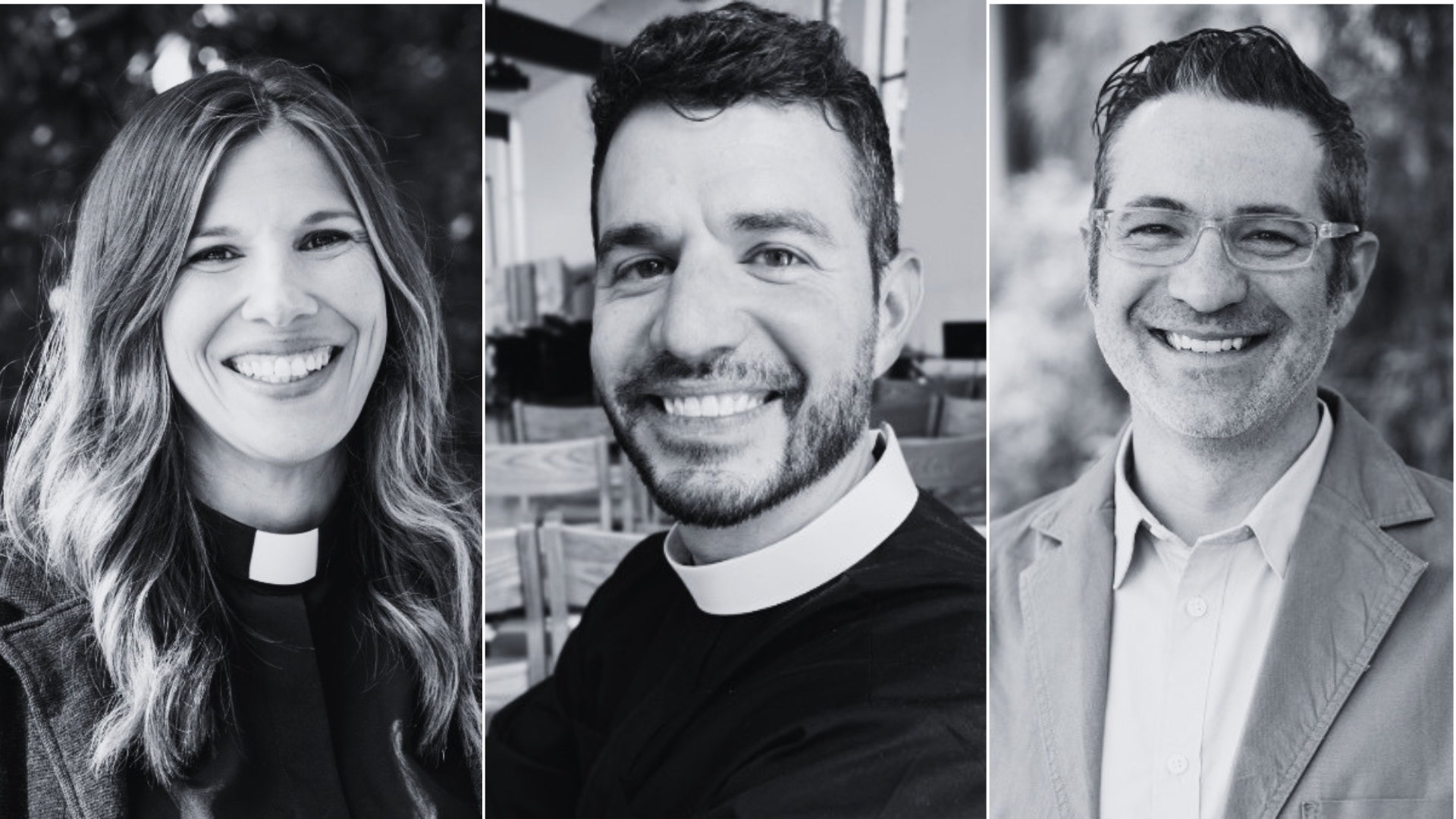
This insight echoed throughout the 2026 Martin Institute Christian Formation Workshop at Westmont College, hosted by the Martin Institute for Christianity & Culture. Several C4SO clergy, including the Rev. Dr. Jason Veach of Christ Church KC, the Rev. Kara Griffith of Christ Our Life Raleigh, and the Rev. Michael Distefano of Christ Church Austin, participated in the workshop, titled “Practice Unto Virtue: The Role of Christian Practices in Virtue Formation.”
The workshop brought together theologians, philosophers, psychologists and pastors from more than 20 academic institutions including Fuller Seminary, Regent College, Baylor University, Calvin University, Biola University and the University of Notre Dame. It also included over 15 ministry organizations including Renovare, Practicing the Way, Center for Christianity and Public Life, Christian Alliance for Orphans and more.
The workshop conversation centered on a pressing question: How do Christian practices actually form Christlike virtue? Across three days of conversation bridging theology, psychology and ministry, one theme surfaced again and again: Lasting transformation happens most deeply in the context of loving relationships.
The encouraging news is that transformation is not accidental. The kinds of environments that shape people toward Christlikeness can be intentionally designed. Presenter Rob Loane from Vantagepoint3 quoted James Houston:
“We have spiritual maps and mapmakers ad nauseam in North America, what we need are more mountain guides.”
Guides walk alongside us. They notice when we’re struggling, encourage us to keep going and help us navigate what we could not have anticipated on our own. Discipleship works much the same way.
In C4SO churches, we rightly invest significant energy in teaching Scripture and encouraging practices like prayer, fasting, generosity and service. The deeper question raised throughout the workshop was how these things actually form Christlike character that endures.
Dr. Pamela King of Fuller Seminary offered a compelling insight drawn from developmental psychology and formation research. She suggested that information and spiritual disciplines become transformational when they connect with meaning. That connection most often happens through loving relationships.
Michael Distefano put it this way: “Our content and our practices are only effective unto growth in virtue insofar as they bond to meaning in the context of loving relationships.”
Intentionality is also a key factor. Practices train our attention and obedience, but it’s really our intention—what we are intending to do when we fast, pray, practice hospitality—that shapes us. If we are intending to impress God when we pray, that way of being is formed in us. If we are intending to surrender to God when we pray, that way of being is formed in us.
To be conformed to Christ, we need to practice what he practiced (prayer, fasting, generosity) and also how he practiced it. Christ’s intention in his practices was fundamentally relational dependence. Thus, loving relationships are the soil where transformation actually takes root. Human relationships are a training ground for attending to another with the intent to receive, depend, listen, love.
“[Speaker] John Ortberg called us to be ministers and ministries that invite our people into transformation, and paired with Willard’s teaching that, even more than invitation, we should expect our people to become transformed,” Kara Griffith says. “While formation is one of the four values at our church, it is so easy to become mired in all the other things we do. I was challenged, inspired and convicted to create space to really pray and think about the practical and tangible means that people become transformed into the image of Christ.”
Imagine two small groups studying the same passage of Scripture. One meets in rows of chairs under fluorescent lights, Bibles open, glancing at the clock, then disperses after the final “amen.” The other group gathers around a kitchen table with shared food, children interrupting conversations, laughter between difficult reflections, and prayers that continue long after the evening was supposed to end.
The curriculum is identical, but the environment is not.
It is what Michael describes as the “social architecture” of formation: the intentional design of environments that either nurture or hinder meaningful relationships. The Church devotes significant energy to sermons and discipleship programs. Do we give equal attention to the relational structures those practices require in order to flourish?
“A takeaway I sensed was the importance of the slow work of virtue formation,” Jason Veach says. “This connects directly to the important work of clergy formation and the process of discernment for holy orders. I sensed a call to ‘slow down’ and resist the temptation to rush the process. When formation is hurried, it can shortchange ordinands at best and, at worst, create conditions that lead to significant harm.”
As C4SO’s clergy participants considered the life of their own parishes, the workshop urged them to ask not only, “What are we teaching?” or even, “What practices are we encouraging?” but “Are we fostering the kinds of relationships where people are actually known, deeply loved and slowly formed into the likeness of Christ?”